Why do most transformations fail?
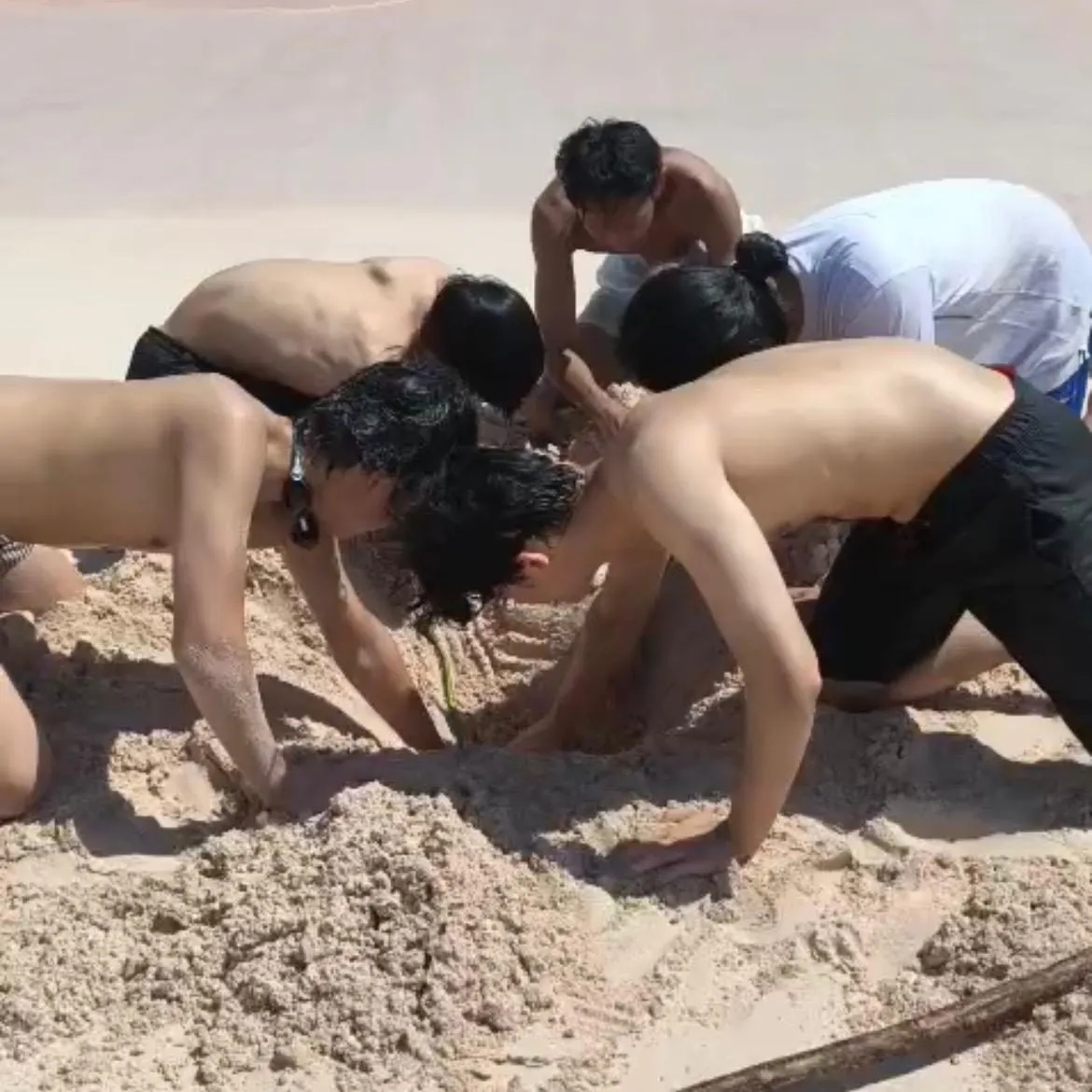
Because leaders focus on the gears while ignoring the sand grinding them down.
Organizations are complex systems, and the primary factor in that system is human interaction. Yet, most organizations put very little effort into those interactions.
Instead, they double down on what’s visible: they hunt for high performers, implement new tools, roll out SOPs, and tweak KPI systems. In my experience as a leader and now as a coach, I’ve seen this lead to “adequate” results at best—but never exceptional ones.
What’s limiting your performance isn’t your strategy; it’s the “sand in the gearbox.”
Is your organization grinding to a halt?
Before reading further, identify exactly where your friction points are.




What this means:
You have a few “grains of sand” in specific areas. Your gearbox is still running relatively smoothly, but these friction points will grow if ignored.Priority Action:
- Identify which section had the most checks—that’s where to focus first
- Start with improving leadership communication and transparency
- Create space for honest conversations about what’s really happening
Risk Level: Low to moderate. Address now before it becomes significant.
What this means:
There is significant friction slowing your organization down. Your transformation is likely “grinding its gears,” wasting time, energy, and budget. Some gears are working, but others are struggling.
Priority Action:
- Look at Section 2 (Behavior)—this is typically where the most damage occurs
- Focus on one area: either silos OR communication gaps OR leadership accountability
- Consider bringing in external help to identify blind spots
- Start a focused 90-day intervention on your biggest friction point
Risk Level: Moderate to high. Action needed within 3-6 months to prevent deterioration.
Your gears are struggling and the sand is causing real damage to performance and outcomes. Transformation efforts will likely fail without addressing these friction points. Immediate intervention is recommended.
The sand is actively damaging your organizational “engine.” Transformation efforts will fail without addressing these friction points. Your people are fighting the system rather than working with it.
Priority Action:
- This requires a comprehensive human-centered transformation approach
- Start with leadership alignment—they must acknowledge the problem and commit to change
- Don’t launch new initiatives until you address the underlying behavior and culture
- Engage an experienced partner to guide the transformation
Risk Level: High. Without intervention, you risk:
- Failed transformation investments
- Loss of top talent
- Continued market share erosion
- Organizational dysfunction becoming “normal”
What this means:
Your gearbox is nearly seized. The organization is fighting itself at every turn. Any transformation initiative will face enormous resistance. The sand has become concrete.
Priority Action:
- Stop launching new initiatives—they will fail and create more cynicism
- Conduct an honest organizational assessment with leadership
- Consider a fundamental reset of culture, structure, and leadership behaviors
- This requires executive-level commitment and likely external expertise
- Begin with psychological safety and trust-building before anything else
Risk Level: Critical. Without immediate intervention:
- Transformation failure is virtually guaranteed
- Best people will leave for healthier organizations
- Competitive position will continue to erode
- Recovery becomes exponentially harder with time
What is the “Sand” destroying your efforts?
The sand is invisible until the damage is done. It manifests as:
- Organizational culture that quietly resists change.
- Beliefs and conditioning that keep people stuck in old habits.
- Poor communication that leads to constant “surprises.”
- Silos that block the flow of information and value.
I’ve seen organizational silos delay a critical market launch by nearly a year, leading to exploded costs and a demoralized team. All of this can be summarized in one word: Behavior.
The Interdependent Triangle
To understand how to fix this, we look at the relationship between three elements:
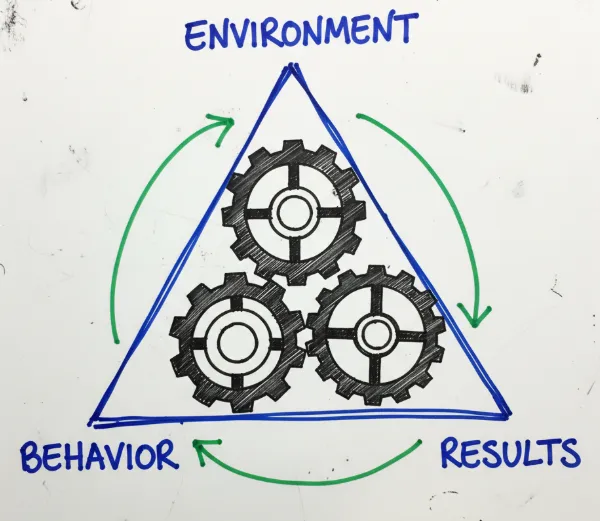
- Environment (The Gearbox): The system you work in (SOPs, KPIs, tools).
- Behavior (The Gears): How your people actually move and interact.
- Results (The Outcome): Productivity, efficiency, and success.
In a mechanical gearbox, it’s obvious that sand is a disaster. In an organization, we tend to turn a blind eye to it. The beginning of a new cycle is the perfect time for an ‘oil change’—to identify and remove the friction.
Get Your Personalized Friction Report
I built the Sand Diagnostic Tool to pinpoint exactly where friction is killing your performance. Complete the assessment to receive a report showing your biggest opportunities for “flow.”
What this means:
You have a few “grains of sand” in specific areas. Your gearbox is still running relatively smoothly, but these friction points will grow if ignored.Priority Action:
- Identify which section had the most checks—that’s where to focus first
- Start with improving leadership communication and transparency
- Create space for honest conversations about what’s really happening
Risk Level: Low to moderate. Address now before it becomes significant.
What this means:
There is significant friction slowing your organization down. Your transformation is likely “grinding its gears,” wasting time, energy, and budget. Some gears are working, but others are struggling.
Priority Action:
- Look at Section 2 (Behavior)—this is typically where the most damage occurs
- Focus on one area: either silos OR communication gaps OR leadership accountability
- Consider bringing in external help to identify blind spots
- Start a focused 90-day intervention on your biggest friction point
Risk Level: Moderate to high. Action needed within 3-6 months to prevent deterioration.
Your gears are struggling and the sand is causing real damage to performance and outcomes. Transformation efforts will likely fail without addressing these friction points. Immediate intervention is recommended.
The sand is actively damaging your organizational “engine.” Transformation efforts will fail without addressing these friction points. Your people are fighting the system rather than working with it.
Priority Action:
- This requires a comprehensive human-centered transformation approach
- Start with leadership alignment—they must acknowledge the problem and commit to change
- Don’t launch new initiatives until you address the underlying behavior and culture
- Engage an experienced partner to guide the transformation
Risk Level: High. Without intervention, you risk:
- Failed transformation investments
- Loss of top talent
- Continued market share erosion
- Organizational dysfunction becoming “normal”
What this means:
Your gearbox is nearly seized. The organization is fighting itself at every turn. Any transformation initiative will face enormous resistance. The sand has become concrete.
Priority Action:
- Stop launching new initiatives—they will fail and create more cynicism
- Conduct an honest organizational assessment with leadership
- Consider a fundamental reset of culture, structure, and leadership behaviors
- This requires executive-level commitment and likely external expertise
- Begin with psychological safety and trust-building before anything else
Risk Level: Critical. Without immediate intervention:
- Transformation failure is virtually guaranteed
- Best people will leave for healthier organizations
- Competitive position will continue to erode
- Recovery becomes exponentially harder with time
About Joerg Sauer
I am Joerg, a former catalyst C-suite leader. Today, I partner with organizations in human-centered transformations.
I believe that sustainable transformation and impactful leadership starts with the individual. I created the Sand in the Gearbox diagnostic to help leaders check if their internal collaboration is working as a smooth engine—or if the human factor has become sand in the gears.
“Who I am is how I coach.”
Leave a Reply