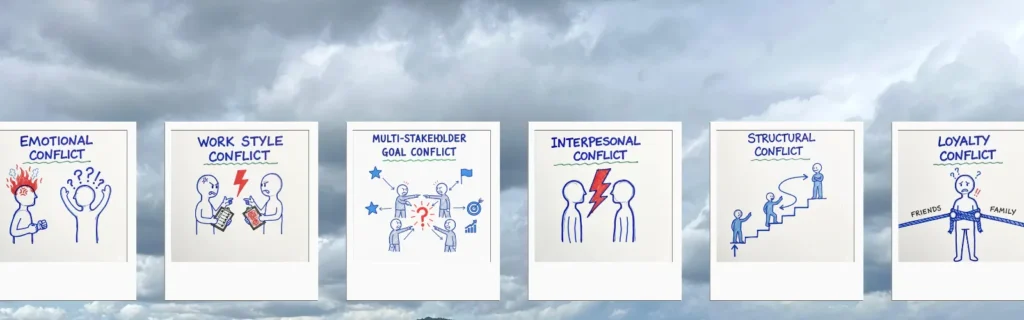
45 Types of Conflict: A Comprehensive Guide
Conflict is an inevitable part of human interaction—in our workplaces, relationships, and communities. Understanding the specific type of conflict you’re facing is the first step toward resolution.
I’ve identified 45 distinct conflict types across seven key categories. Each type has unique characteristics, triggers, and resolution approaches. Browse the categories below to understand what you’re experiencing and discover pathways to resolution.
If you are curious if you are already in a conflict or how do deal with a difficult conversation
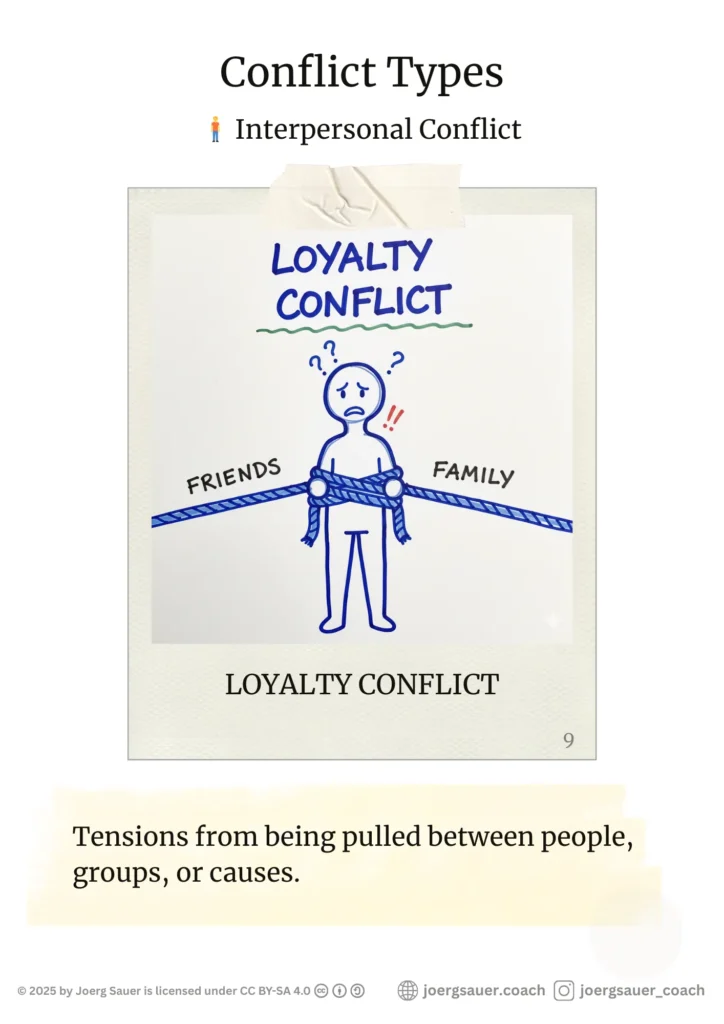
Interpersonal Conflict
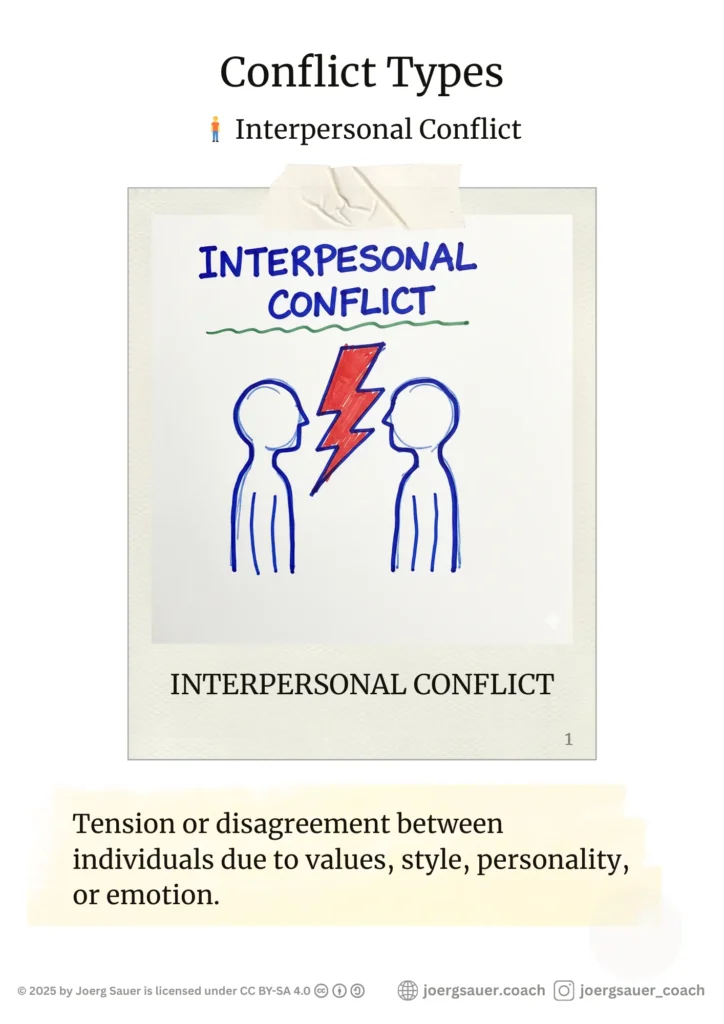
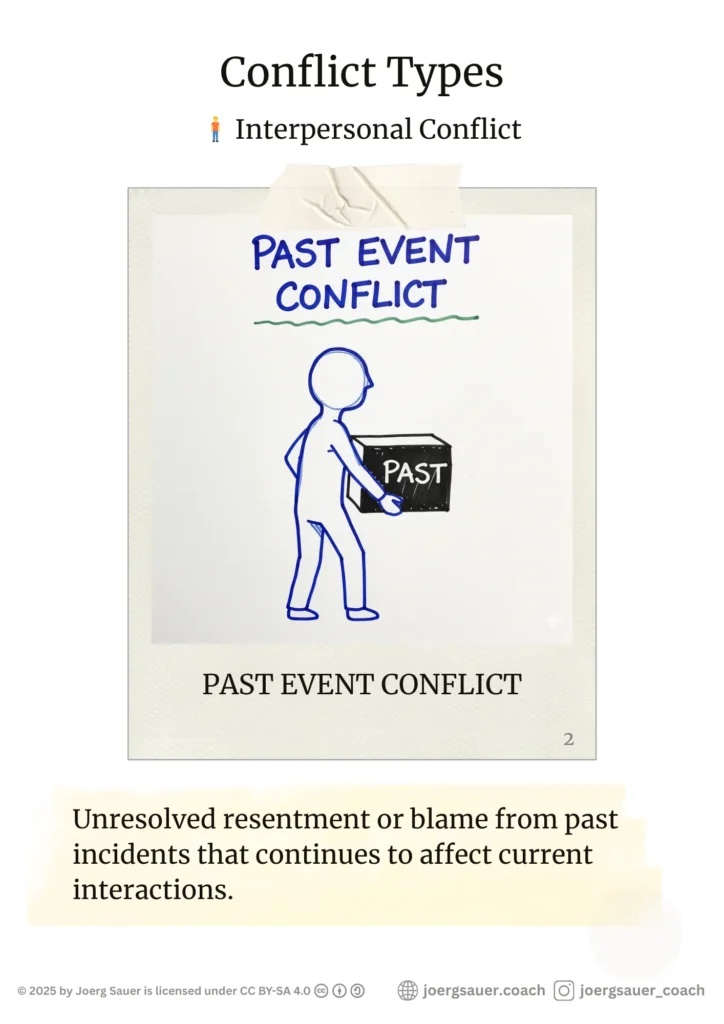
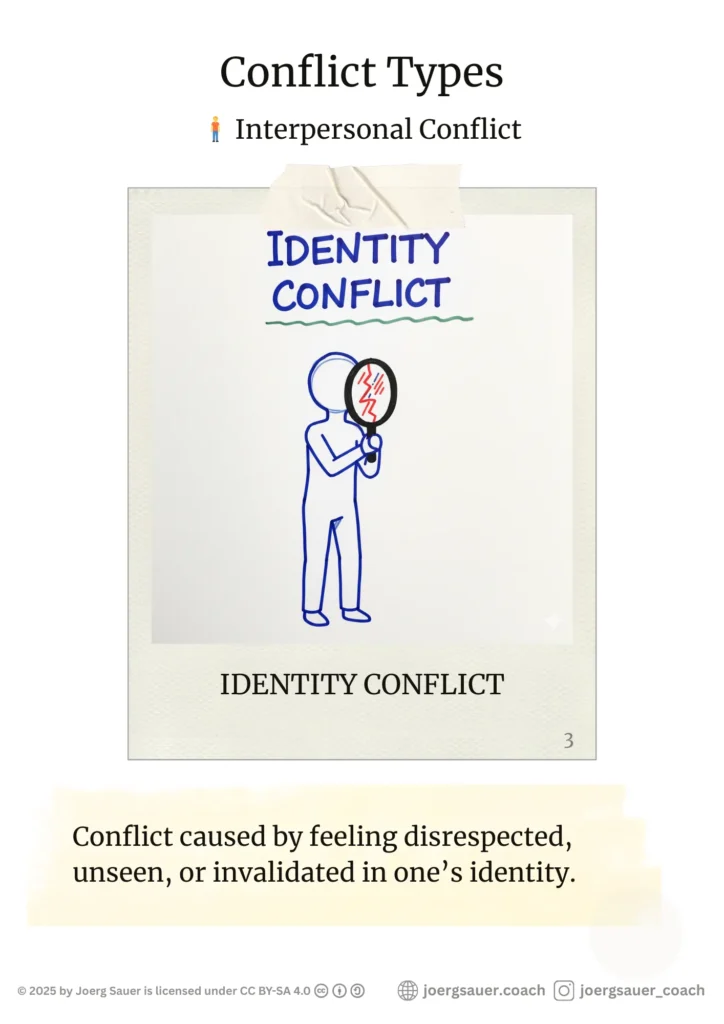
Interpersonal conflicts arise between individuals and are often rooted in differences in values, communication styles, personality traits, or emotional responses. These conflicts feel personal because they touch on our identity, past experiences, and how we relate to others one-on-one.

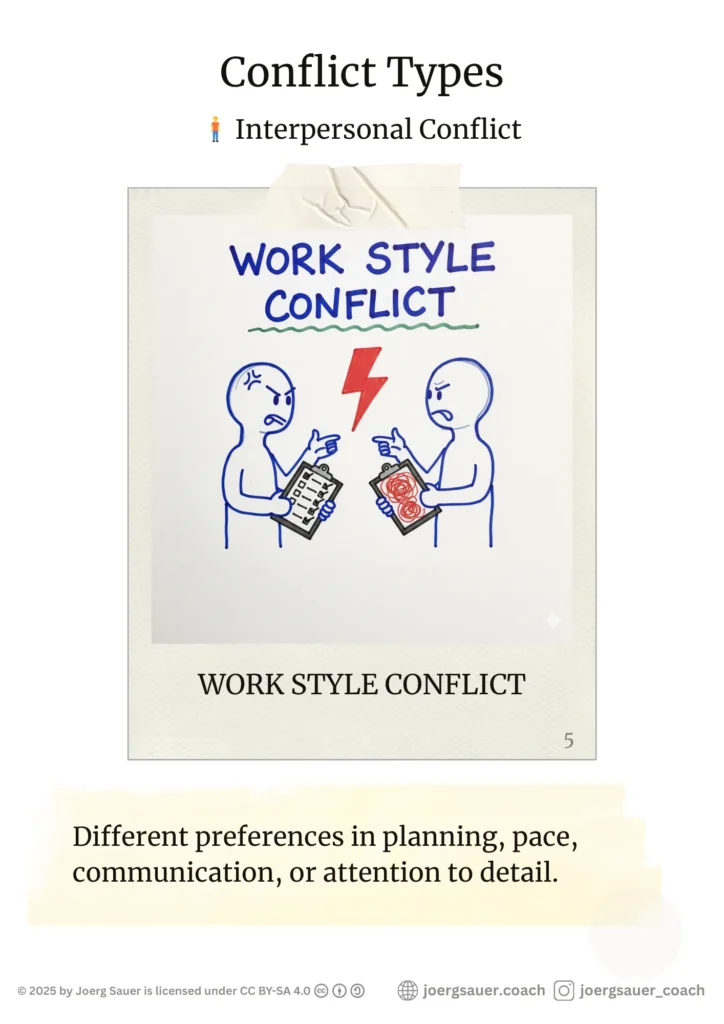
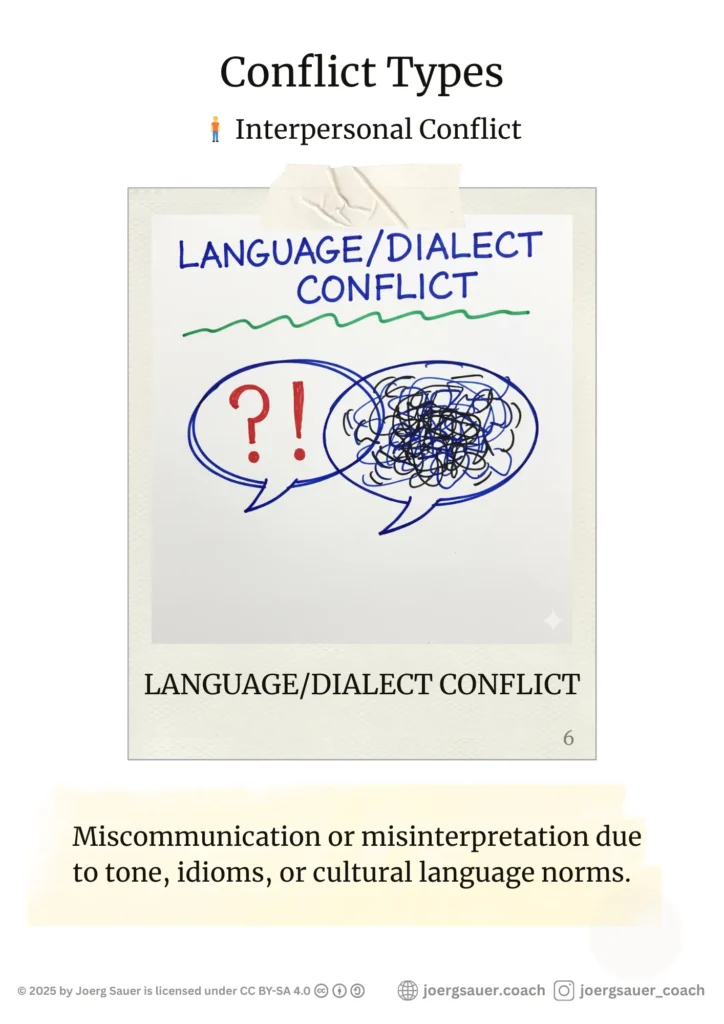
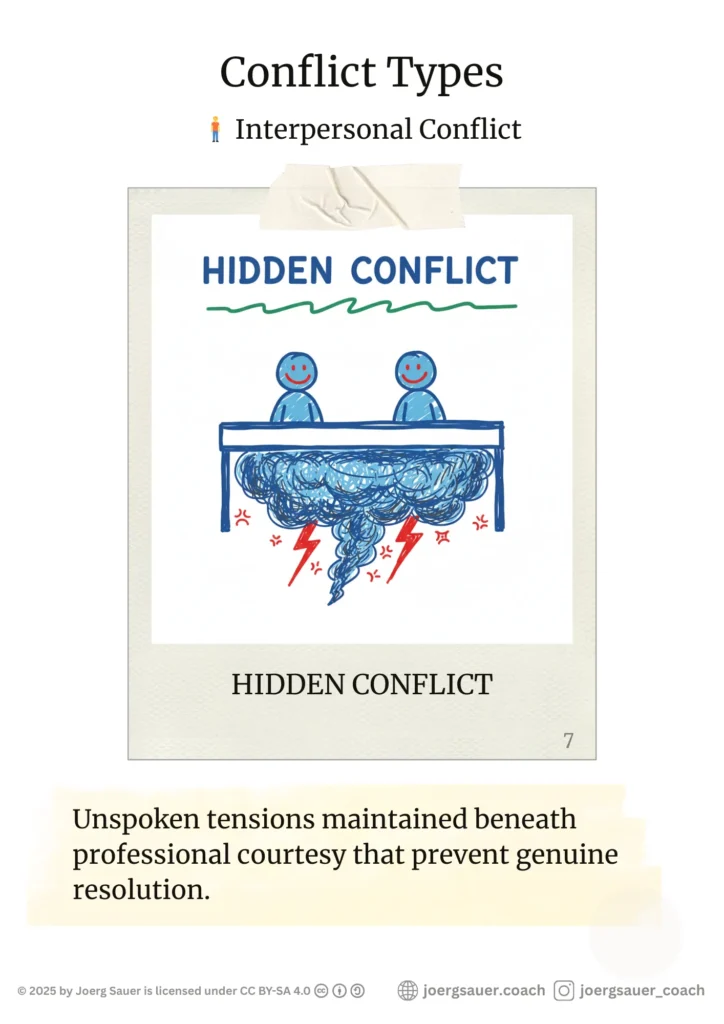
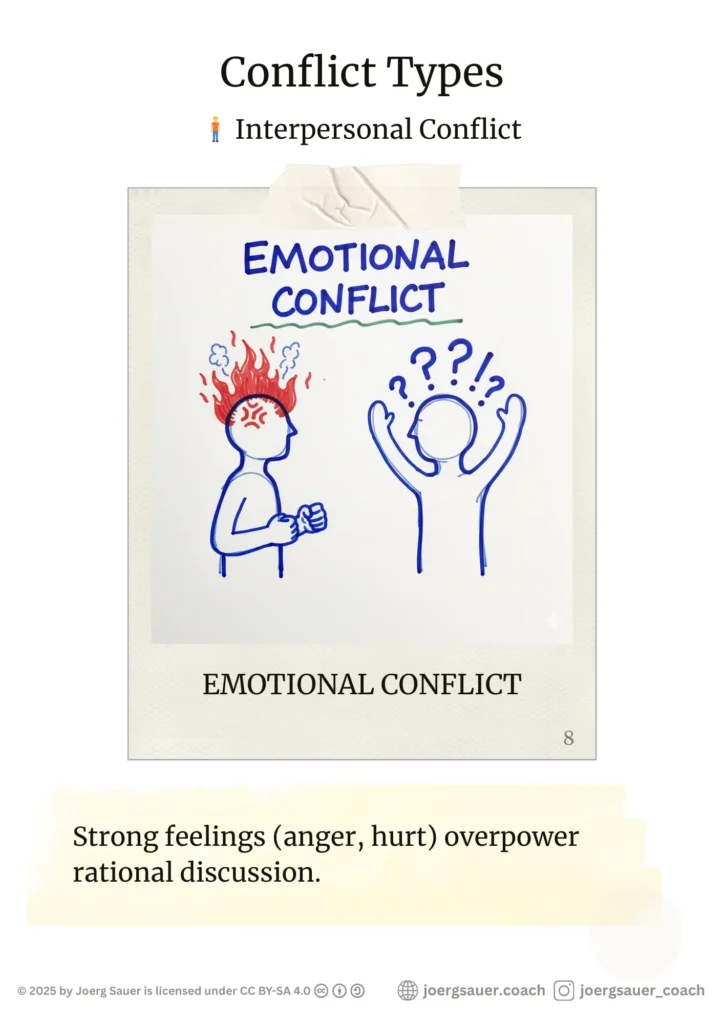

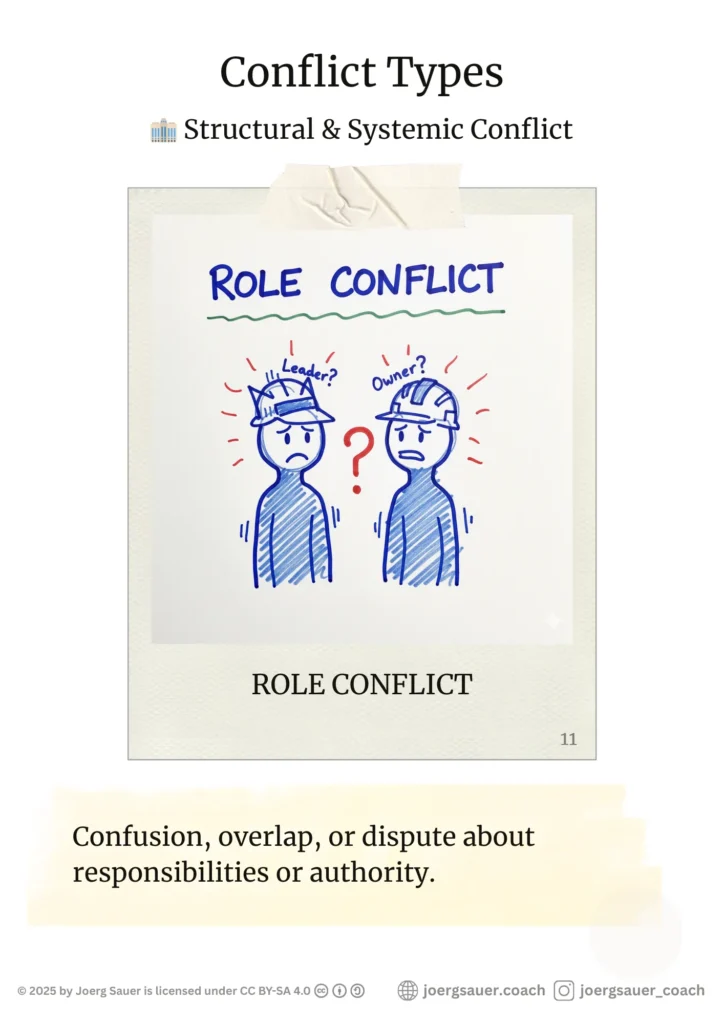
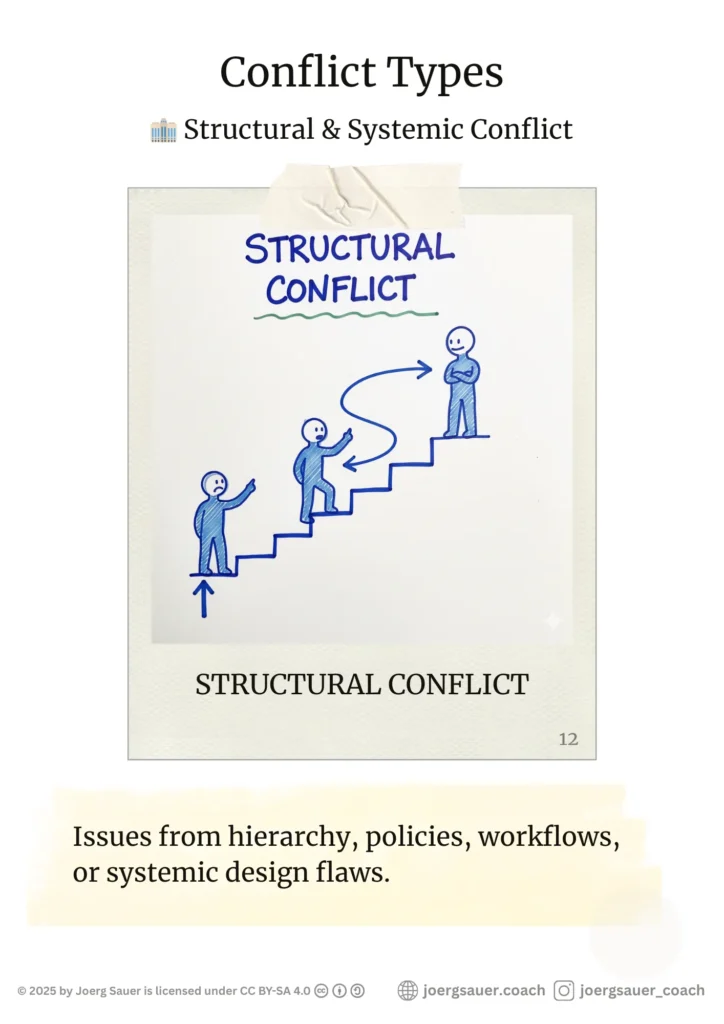
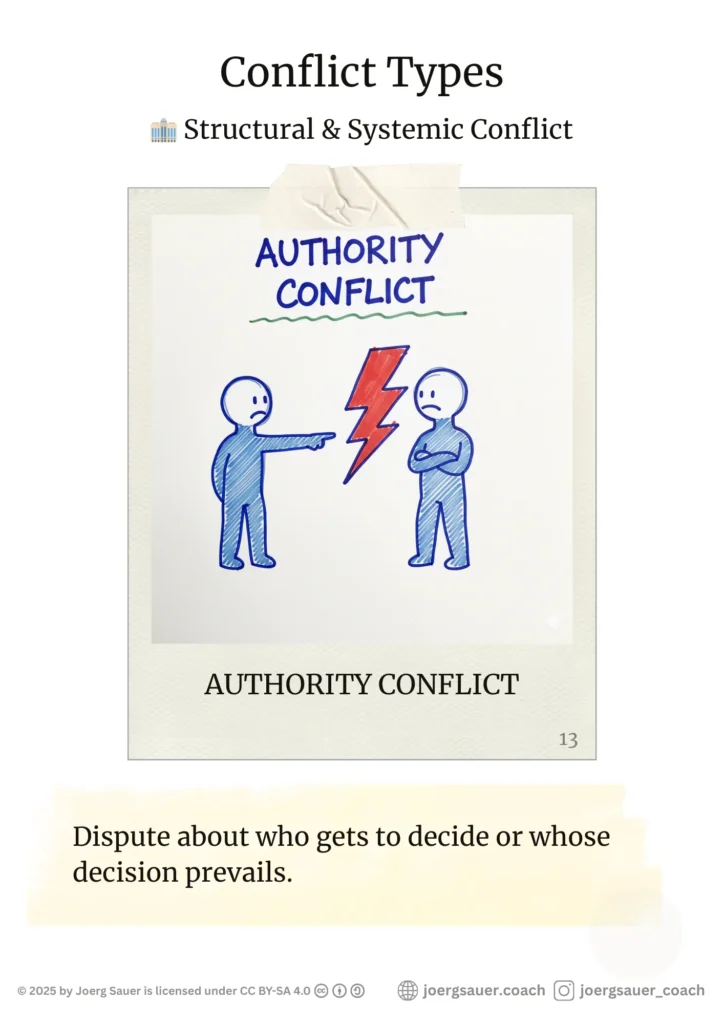
Structural & Systemic Conflict
These conflicts emerge from organizational design, policies, workflows, and systems. They’re often not about people but about how work is structured. When roles are unclear, resources are scarce, or processes don’t align, structural conflicts arise—and they persist until the system itself changes.


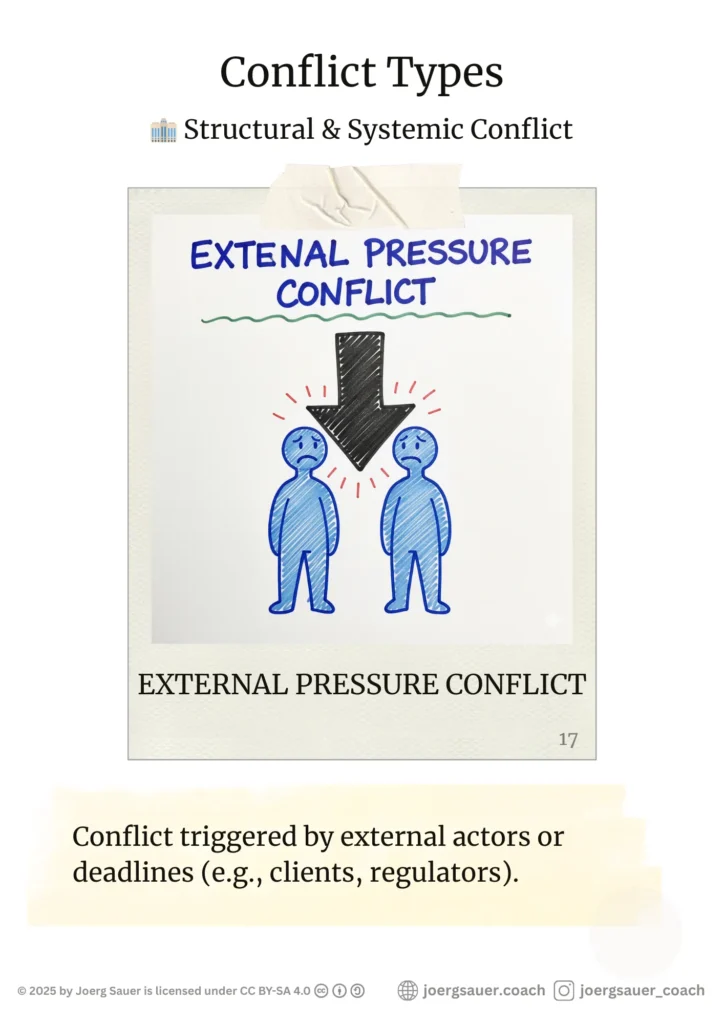
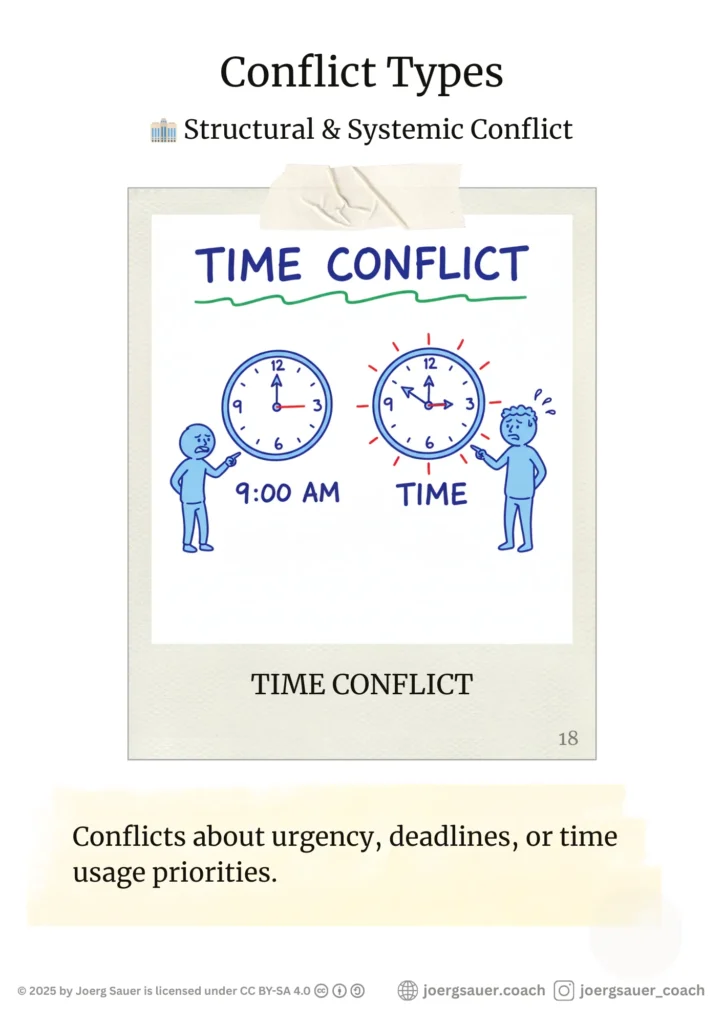
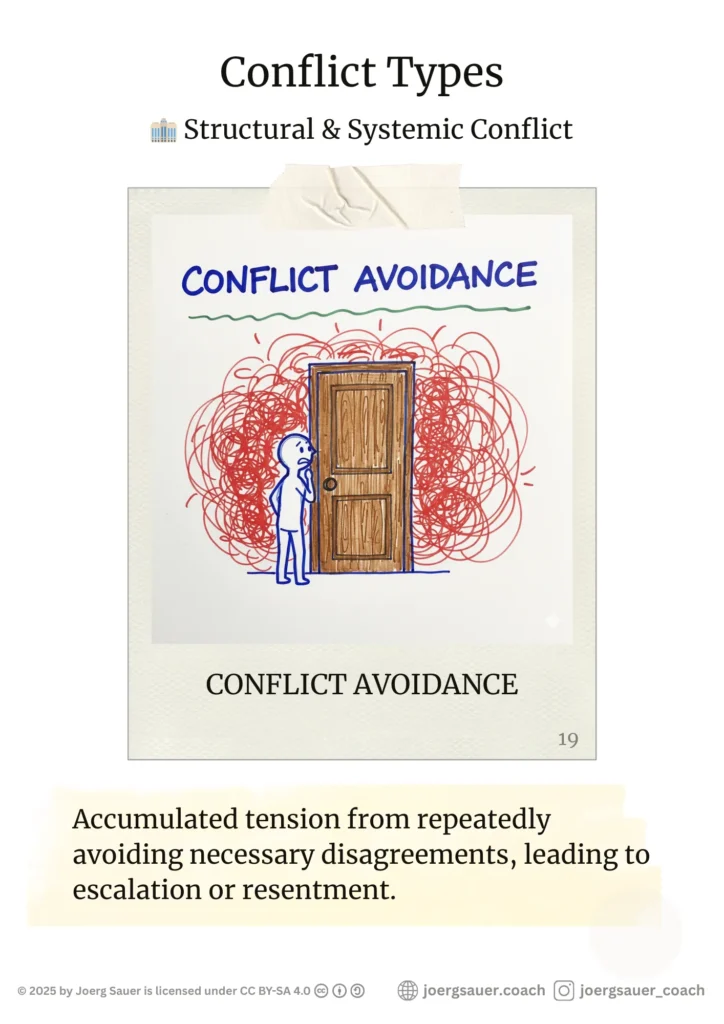

Goal & Task-Oriented Conflict
Task-oriented conflicts focus on what needs to be achieved and how. These conflicts can actually be productive when handled well—they challenge assumptions, surface better solutions, and clarify priorities. The key is keeping the focus on the work rather than making it personal.
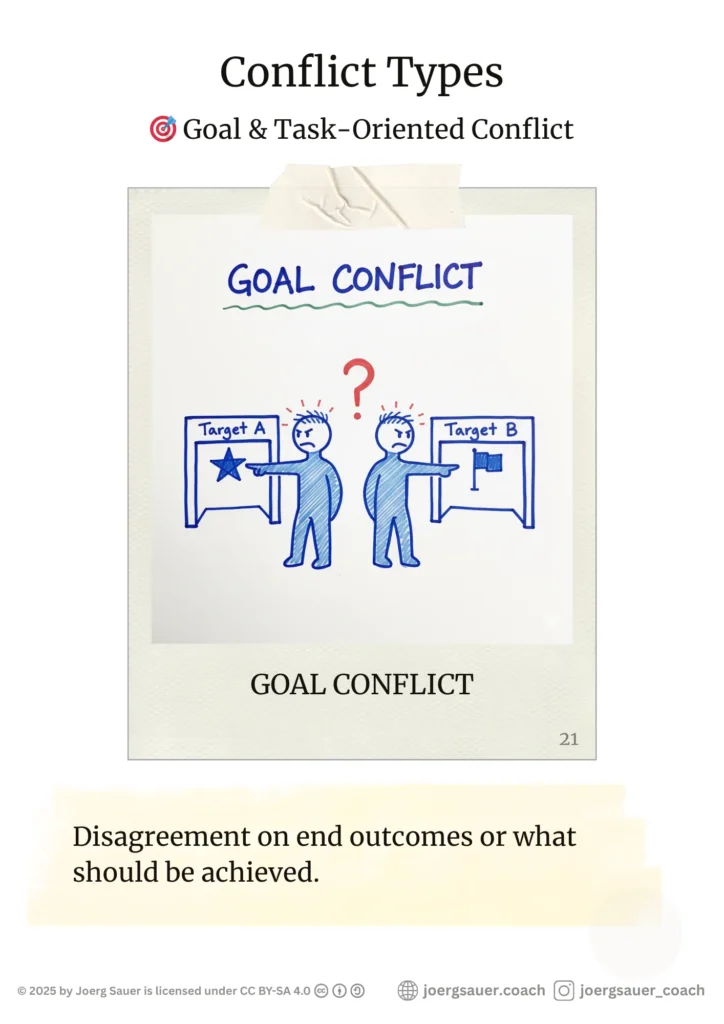
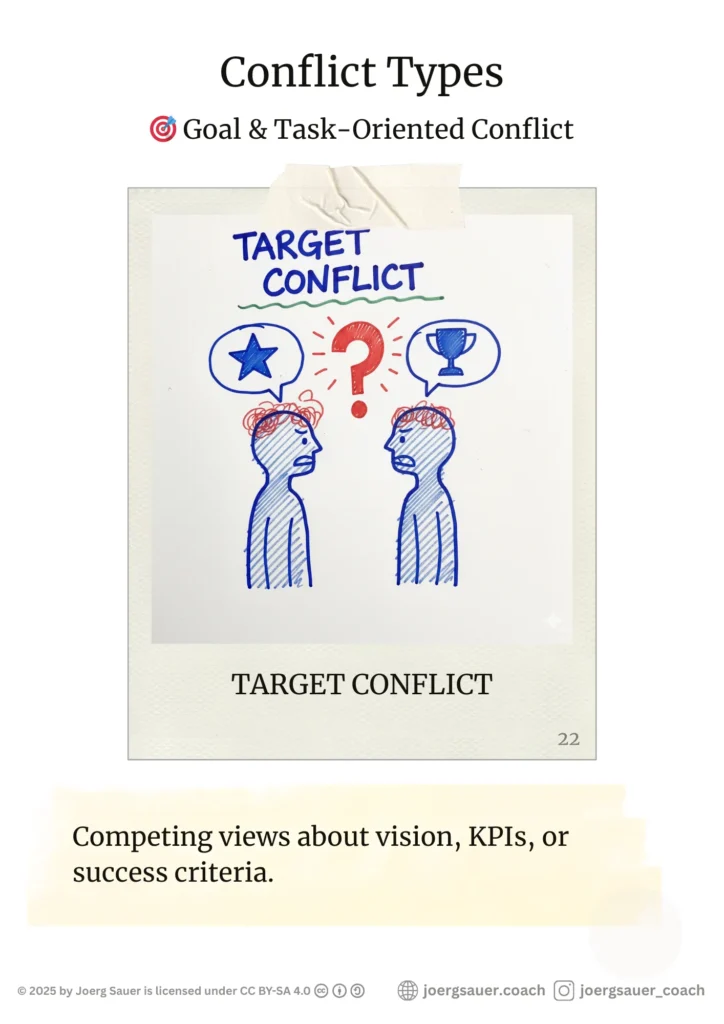


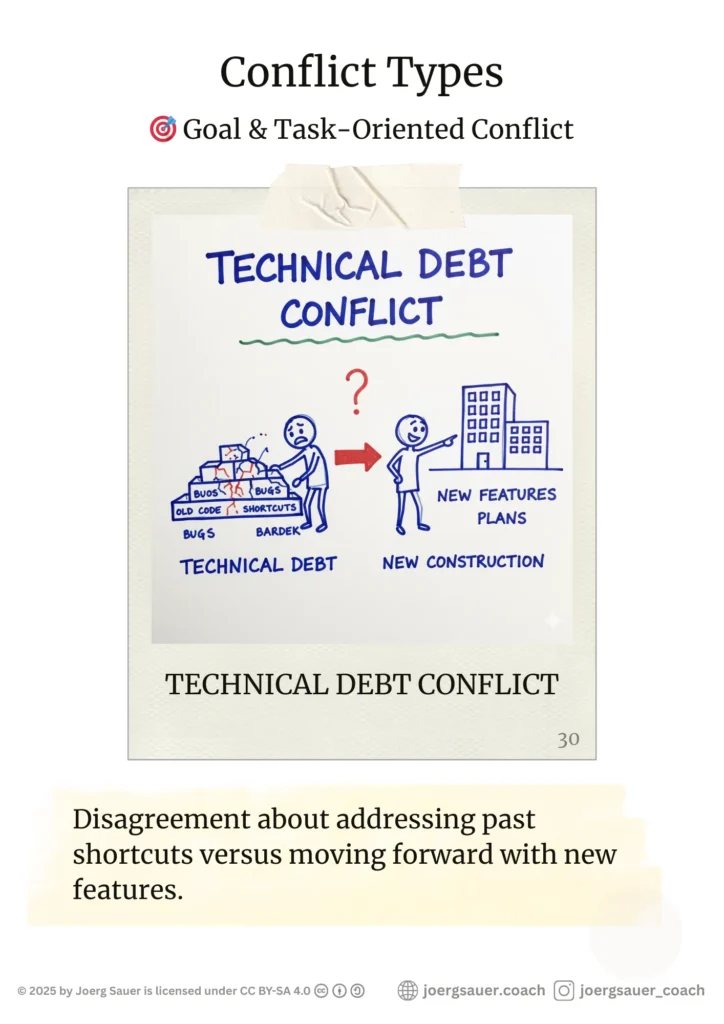
Cognitive & Decision-Making Conflict
How we think, process information, and make decisions varies dramatically from person to person. Some of us rely on data and analysis; others trust intuition and experience. Some embrace risk; others seek safety. These cognitive differences create friction when we need to decide together.

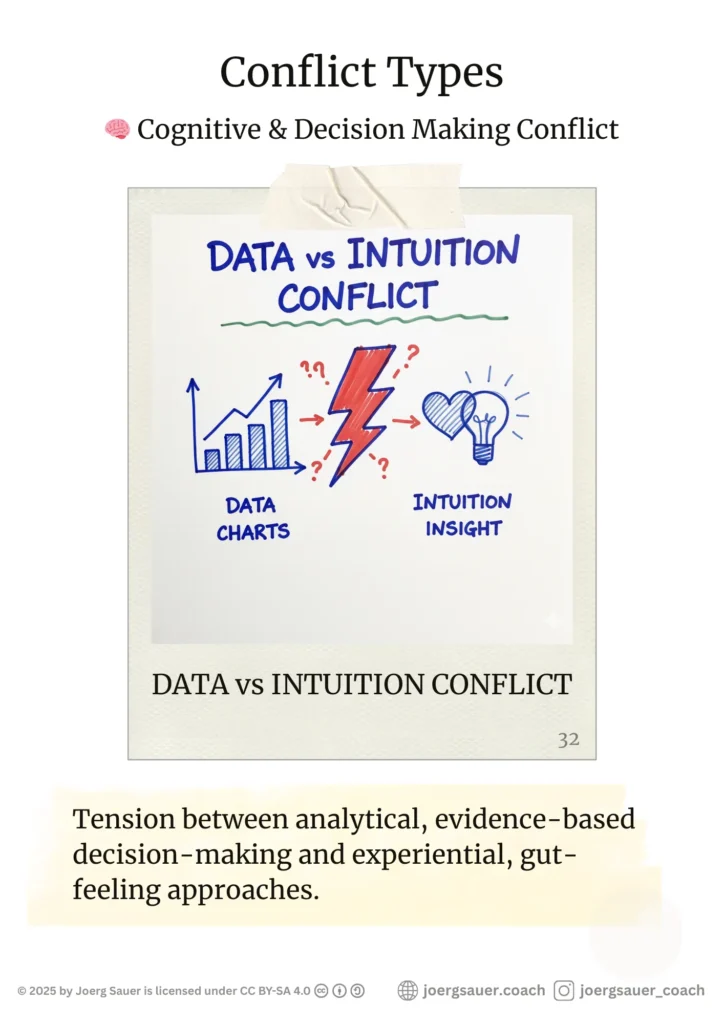
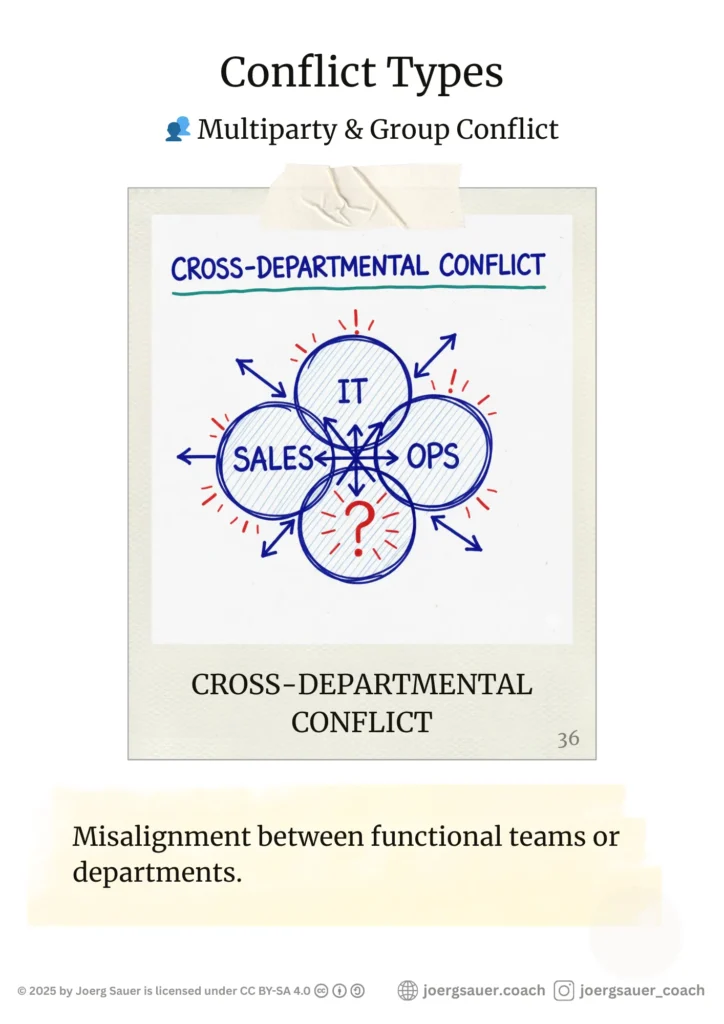
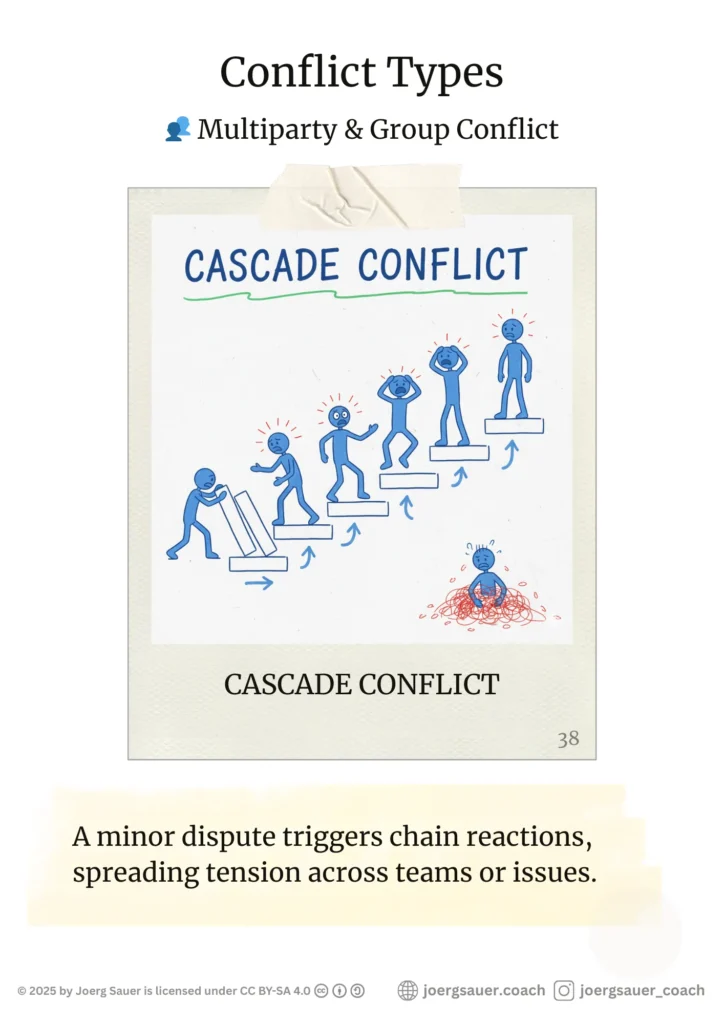
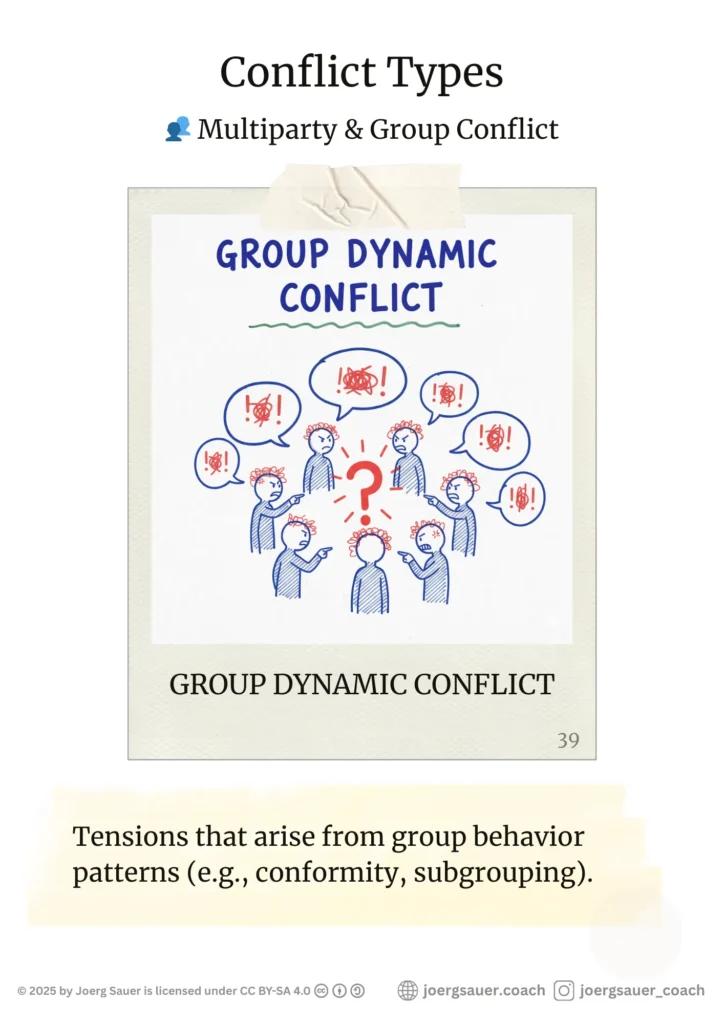
Multiparty & Group Conflict
When more than two people are involved, conflict becomes exponentially more complex. Alliances form, communication gets triangulated, and what started as a simple disagreement can spread throughout an entire organization. These conflicts require understanding group dynamics, not just individual positions.
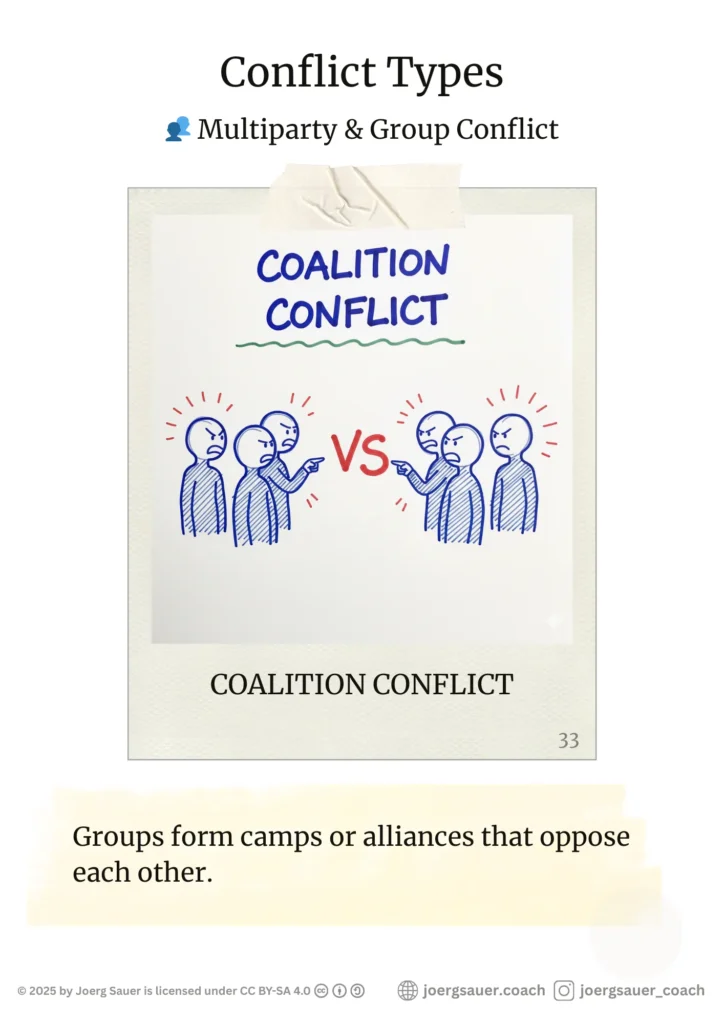



Cultural & Inclusion-Related Conflict
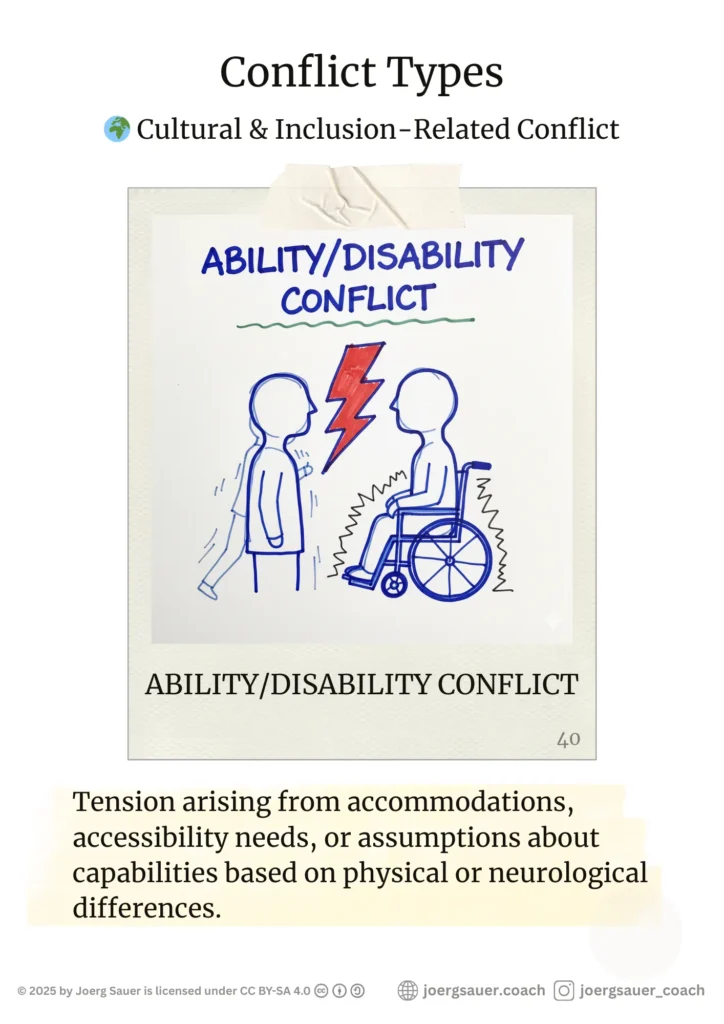
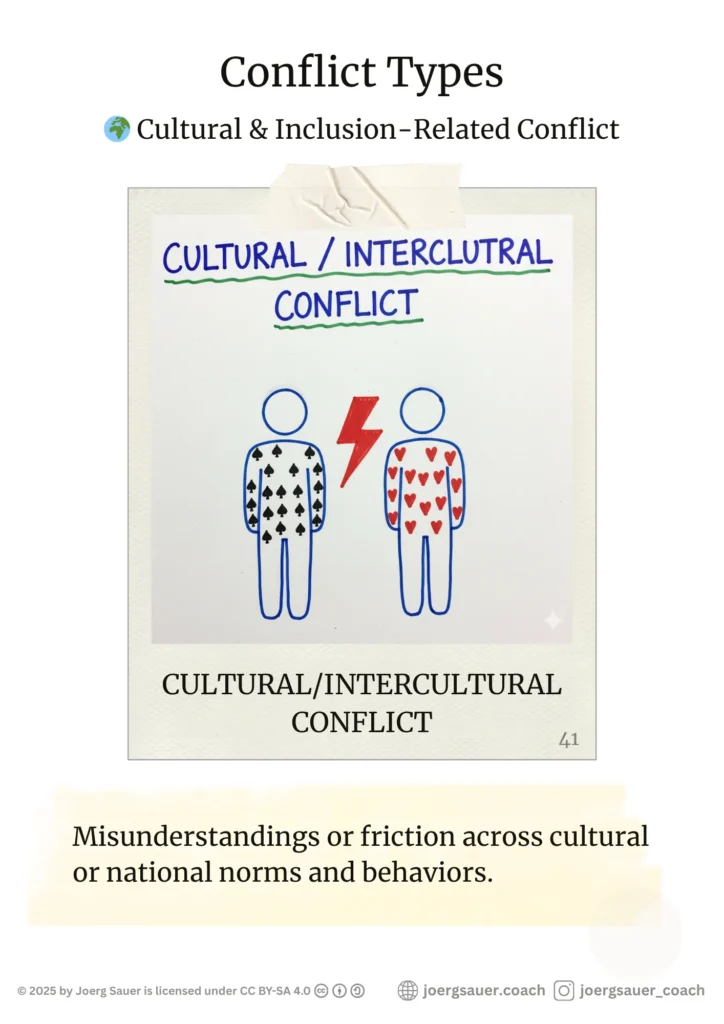
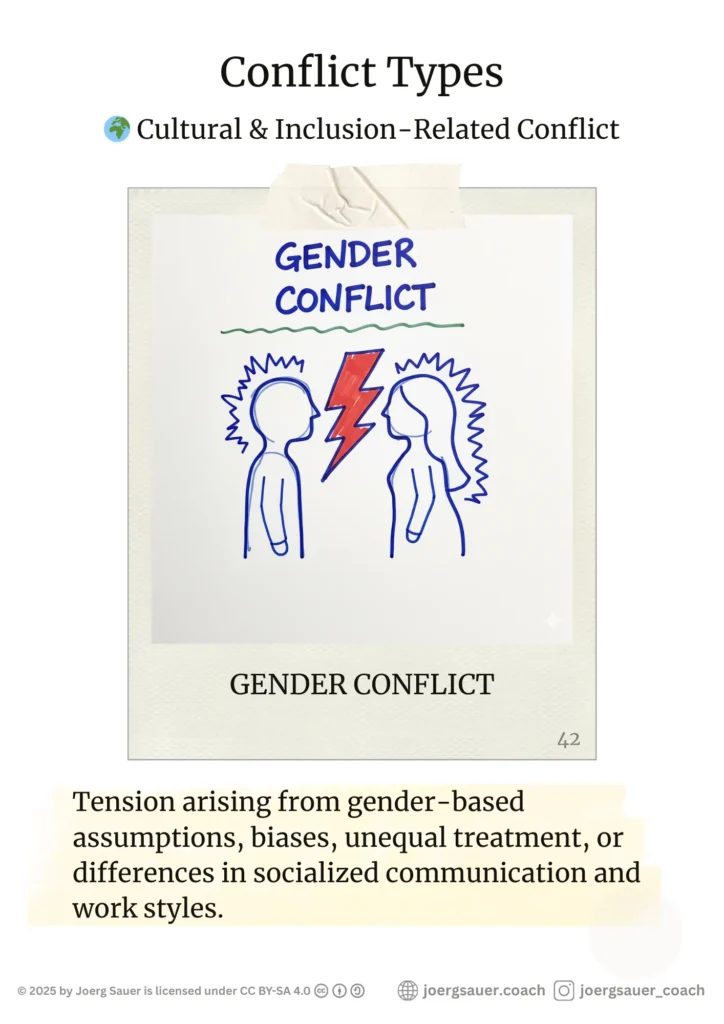
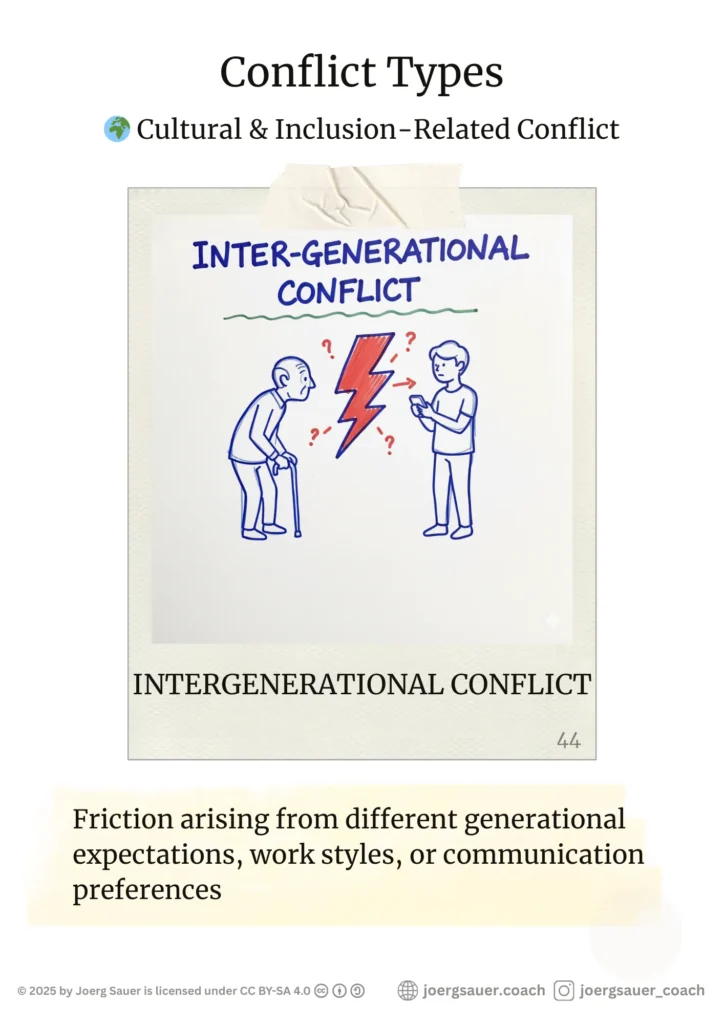
Our backgrounds—cultural, generational, socioeconomic, gender, ability—shape how we see the world and interact with others. When these differences aren’t understood or respected, conflict emerges. These are often the most sensitive conflicts because they touch on identity, belonging, and equity.


Additional Conflict Resources
Frequently Asked Questions
What’s the most common type of conflict?
Interpersonal conflict is the most frequently reported, often stemming from work style differences or miscommunication.
Can one situation involve multiple conflict types?
Absolutely. Most conflicts are layered—what appears as a goal conflict may also involve value conflicts, role conflicts, or cultural misunderstandings.
How do I know which conflict type I’m dealing with?
Start with the category that feels most relevant, then explore specific types. If multiple types resonate, you’re likely dealing with a complex, multi-layered conflict.
Which book do you recommend?
Difficult Conversations by Douglas Stone et al. of the Harvard Negotiation Project is my favorite resource on difficult conversations. It’s available as an audio book as well, and I find listening to it very helpful to refresh my awareness.